
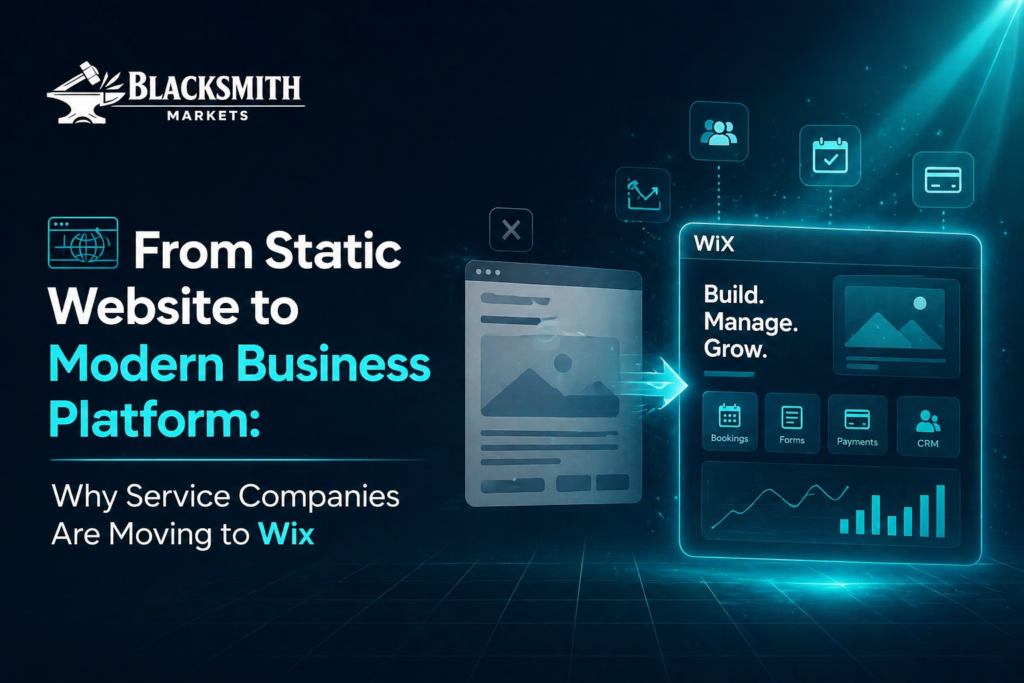
Introduction: A Business Website Should Do More Than Sit Online
For many service companies, the first website was built to prove the business existed online. It usually had a homepage, a few service descriptions, contact information, and maybe a small gallery. That kind of static website may have worked when customers only needed a phone number or a basic company overview. Today, a service business website has a bigger job. It should help customers understand services, build trust, request quotes, use forms, read helpful information, view examples of work, and make decisions faster. This is why many local and service-based companies are moving away from static websites and toward more flexible platforms like Wix.
The Problem With Static Websites
A static website is not always bad. In some cases, a simple site can still do its job. The problem begins when the business changes but the website stays the same. Service companies often add new services, expand into new areas, update their process, collect new testimonials, or need better ways to receive inquiries. If the website is difficult to update, these improvements may never appear online.
Over time, the website starts to feel disconnected from the real business. The company may be active, professional, and growing, but the website still looks like it belongs to an earlier stage. That gap can affect trust. A customer may wonder whether the business is still active, whether the information is accurate, or whether the company is as professional as its competitors.
Why Service Companies Need More Flexible Websites
Service businesses depend on clarity and trust. A customer does not always understand the technical details of a service, so the website needs to explain things in a simple and useful way. A flexible website makes this easier. The business can create dedicated service pages, add FAQs, publish project examples, update forms, improve mobile layouts, and create pages for different service areas.
This is especially valuable for companies in surveying, construction, inspection, maintenance, consulting, home services, and other local industries where customers often compare several providers before reaching out. A modern website does not need to be complicated. It needs to be easy to update, clear to navigate, and useful for people who are ready to contact the business.
Wix as a Modern Business Platform
Wix is often attractive to service companies because it works as more than a basic website builder. It gives businesses tools to manage pages, content, forms, images, SEO settings, blog posts, and customer-facing information from one platform. For a service business, this can turn the website from a static brochure into a practical business tool.
A company can use Wix to publish service pages, create quote request forms, show testimonials, display project photos, add location-based content, write helpful articles, and update information without rebuilding the entire site. This matters because a business website should not be frozen after launch. It should be able to grow as the company grows.
Why Many Businesses Compare Older Builders With Wix
Many businesses that consider moving to Wix are already using another website builder or an older platform. They may not be unhappy with everything about their current site, but they may feel limited by design, editing, mobile experience, SEO options, or growth potential.
Before making a move, it is useful to compare what the current platform does well and where it may be holding the business back. For example, businesses considering whether to stay with Weebly or move to Wix can review this breakdown from Weebly-to-Wix.com: Weebly vs Wix: which website builder should you choose?. A comparison like this can help business owners think beyond the look of the website and consider practical questions: how easy the site is to update, how much design control they need, whether the platform supports future growth, and how well it fits the business’s online goals.
Better Service Pages Create Better Customer Understanding
One of the biggest advantages of a modern website platform is the ability to create stronger service pages. Many static websites place all services on one short page. That may be easy to build, but it often does not give customers enough information. People usually search for specific services and want to know whether the company can help with their exact situation.
A better service page explains what the service is, who needs it, what the process looks like, what information the customer should provide, and how to request help. For a surveying company, this might mean separate pages for boundary surveys, construction staking, topographic surveys, ALTA surveys, or site planning support. For another service business, it might mean pages for specific repairs, inspections, consultations, or project types. Clearer service pages help customers feel more confident and give the website more opportunities to appear for relevant search terms.
Stronger Forms Can Increase Inquiries
A static website often has a basic contact form, but a modern service website can do more. Different services may need different types of inquiry forms. A quote request form can ask for location, project type, timeline, and contact details. A consultation form can ask about the customer’s goals. A service request form can help the business collect the information needed to respond faster.
The goal is not to make forms longer. The goal is to make them more useful. A good form helps the customer explain what they need and helps the business respond with better information. Wix makes it easier to create and adjust forms as the business learns what information is most useful. For service companies, this can improve the quality of leads, not just the number of leads.
Mobile Experience Matters for Local Customers
Many local customers search for service businesses from their phones. They may be at home, at a job site, in a car, or comparing options quickly during the day. If a website is difficult to use on mobile, the business can lose inquiries before the customer ever calls.
A modern mobile experience should make important information easy to find. Service pages should be readable. Buttons should be easy to tap. Contact information should be visible. Forms should not feel frustrating. Images should support the message without slowing the experience. Moving from a static or outdated site to Wix can be a chance to rebuild the mobile journey around what customers actually need.
Trust Signals Should Be Built Into the Website
Service companies often win customers through trust. Visitors want to know whether the business is experienced, reliable, local, and capable of doing the job correctly. A static website may include a few trust signals, but they are often limited or hidden. A testimonial may appear only on one page. Project photos may be outdated. Professional credentials may not be visible. The contact page may not explain what happens after someone reaches out.
A modern website can place trust signals throughout the customer journey. Testimonials can support service pages. Project examples can show experience. Local service areas can reassure visitors that the company works in their region. FAQs can reduce uncertainty. A process section can explain how the business works. Trust should not be an afterthought. It should be part of how the website is structured.
Content Helps a Website Stay Alive
One of the biggest differences between a static website and a modern business platform is the ability to keep adding useful content. For service companies, content can answer common customer questions, explain service types, describe project preparation, clarify timelines, and help visitors understand when they need professional help.
A surveying company, for example, could publish articles about when a property survey is needed, what happens during the survey process, or why accurate measurements matter before construction. A contractor could explain how estimates work. An inspector could explain what customers should expect before an appointment. This type of content builds authority and supports search visibility. A website that regularly answers real customer questions becomes more useful over time.
Easier Management Helps the Website Stay Current
A website only helps the business if it stays accurate. When updates are difficult, business websites often become outdated. Old service descriptions remain online. New areas are not added. Outdated photos stay in place. Contact information may be incomplete. Testimonials are never refreshed.
A modern platform can help solve this problem by making routine updates easier. With Wix, a business can more easily edit pages, update images, add forms, publish content, and adjust sections as needs change. This gives the business more control over its online presence. Professional design and strategy are still important, especially during a redesign or migration, but after the site is improved, the business should not feel dependent on technical support for every small change.
Moving to Wix Should Be a Strategic Upgrade
Moving from a static website to Wix should not be treated as a simple copy-and-paste project. The move is a chance to improve the website as a business tool. That means reviewing the current site carefully and asking which pages are still useful, which services need clearer explanations, which content should be updated, which forms are missing, which trust signals should be more visible, and which pages could support search traffic better.
A successful move should improve structure, mobile experience, page clarity, contact options, and future management. The goal is not only to change platforms. The goal is to create a website that better supports the way the business works today.
Conclusion: Modern Websites Support Modern Service Businesses
A static website may help a business exist online, but a modern business platform can help the business communicate, build trust, and generate inquiries. For service companies, this matters because customers are not only looking for a phone number. They are looking for clarity, credibility, convenience, and confidence.
Wix gives many local and service-based businesses a practical way to move beyond the old brochure-style website. It can support better service pages, stronger forms, mobile usability, testimonials, project examples, helpful content, and easier updates. The best website is not necessarily the most complex one. It is the one that helps customers understand the business and take action. For many service companies, moving from a static website to a modern platform like Wix can be the step that turns a passive online presence into a real business asset.